

Unlimited eSIM Data Plans That Actually Work Anywhere You Travel
Imagine landing in a new country and instantly getting online without fumbling with a physical SIM card. An eSIM data plan is a digital profile you download directly to your compatible phone, allowing you to connect to a local network without swapping out your existing SIM. This means you can activate a data plan in minutes right from your device, keeping your home number active while you roam. To use it, simply scan a QR code from your provider and manage the plan through your phone’s settings.
Why Travelers Are Switching to Digital SIM Cards
Travelers are switching to digital SIM cards because an esim data plan eliminates the frantic search for a local SIM upon arrival. You purchase and activate the plan before your trip, ensuring instant connectivity the moment you land. This digital approach also lets you keep your primary number active for calls or two-factor authentication, while the esim data plan handles high-speed internet. No more fiddling with tiny physical cards or risking losing your original SIM. The flexibility to top up or switch carriers remotely, all from a phone app, makes it the superior, hassle-free choice for modern globetrotters.
How Embedded SIM Technology Eliminates Roaming Fees
An embedded SIM (eSIM) eliminates roaming fees by allowing travelers to connect directly to local network providers at local rates, bypassing their home carrier’s international agreements. Instead of incurring per-MB or daily roaming charges, users purchase a regional or country-specific data plan through a simple digital download. The eSIM’s remote provisioning means travelers can activate a new profile instantly upon arrival, removing any need for physical SIM swapping or expensive global add-ons. The result is seamless connectivity that mirrors a local subscriber’s pricing, without any contractual obligations or surprise bills.
Key Differences Between Physical SIMs and Software-Based Profiles
The primary difference lies in physical handling versus digital management. A physical SIM is a tangible chip you must insert, requiring removal to swap carriers. In contrast, a software-based profile, or eSIM, is downloaded directly onto your device, enabling instant activation without a physical card. This makes eSIMs ideal for travel as you can pre-load multiple digital roaming profiles before departure. Furthermore, while physical SIMs lock you into one carrier per slot, eSIMs allow you to store several profiles simultaneously, switching between them via device settings—eliminating the risk of losing a tiny plastic card.
| Aspect | Physical SIM | Software-Based Profile (eSIM) |
|---|---|---|
| Form Factor | Tangible plastic chip | Digital file on device |
| Activation | Manual insertion required | Instant download via QR code or app |
| Carrier Switching | Requires physically swapping cards | Done via on-screen menu in seconds |
| Storage | One profile per tray | Multiple profiles stored internally |
| Loss Risk | Card can be lost or damaged | Tied to device; no separate component |
Top Benefits of Using a Virtual Mobile Network
You land in Tokyo, and your phone instantly connects to a local network through your eSIM data plan. No physical SIM swap, no airport kiosk queue. The top benefit of using a virtual mobile network is this seamless global access. You sidestep roaming fees while keeping your home number active for banking codes. A traveler asks: “How do I avoid paying €10 per day for roaming?” The answer: your eSIM data plan pre-loads local rates, so you stream maps and call a taxi without a second thought. When your trip extends to Seoul, you simply toggle to a new virtual network profile through the same plan, never losing connection or control.
Instant Activation Without Visiting a Store
With an eSIM data plan, activation happens instantly through a digital download, eliminating the need to visit a physical store. After purchasing a plan online, users receive a QR code or activation code to scan. Within moments, the profile installs directly onto the device, enabling immediate network access. This process bypasses travel to a retailer, waiting for a physical SIM card, or dealing with store hours. It provides immediate connectivity upon arrival at a destination or when switching providers, making it ideal for last-minute travel or urgent data needs without any in-person interaction.
Managing Multiple Phone Numbers on One Device
Managing multiple phone numbers on one device becomes effortless with an eSIM data plan. Instead of juggling physical SIM cards, you can store several eSIM profiles, each with its own number, directly on your phone. This allows you to maintain a separate work line for client calls and a personal line for family, all without carrying a second device. You can swiftly switch between profiles in your phone settings to assign a specific number for outgoing calls or data use. Some devices even allow several eSIMs to remain active simultaneously for seamless dual-line operation. This setup centralizes communication, making it easier to control multi-number workflow management from a single, unlocked handset.
Step-by-Step Guide to Setting Up a Digital Profile
To activate your eSIM data plan, first ensure your device is unlocked and connected to Wi-Fi. Navigate to your phone’s cellular settings and select “Add eSIM.” Scan the QR code provided by your carrier or manually enter the activation details. After installation, label the profile (e.g., “Travel Data”) and set it as your primary data line.
Verify your APN settings are correctly configured to avoid connectivity issues.
Finally, disable the physical SIM’s data roaming to prevent accidental charges, and test the connection by loading a webpage. This profile setup ensures seamless data switching without hardware swaps.
Checking Device Compatibility for Remote Provisioning
Before remote provisioning, verify your device supports eSIM via official specs or by dialing a carrier-specific compatibility code, such as checking device compatibility for remote provisioning through the IMEI. Ensure your smartphone is not carrier-locked, as this blocks profile downloads. Confirm your device runs a firmware version that supports eSIM profiles; outdated software can prevent activation. Finally, check that the device has no active physical SIM conflict, as some dual-SIM units restrict eSIM use when a nano-SIM is inserted.
- Use IMEI check tools on the carrier’s website to confirm eSIM support.
- Verify the device is unlocked from its original network.
- Update to the latest OS version that includes eSIM provisioning standards.
- Review dual-SIM settings to ensure no slot conflict occurs.
Scanning a QR Code to Download Carrier Settings
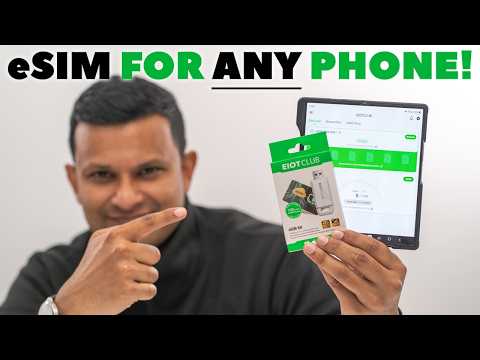
Once your device is ready, scanning a QR code is the fastest way to activate an eSIM data plan. Open your phone’s settings, navigate to the cellular or mobile data section, and select “Add eSIM.” Point your camera at the carrier-provided QR code—this instantly downloads the necessary carrier settings to your device. After scanning, the profile installs automatically, and you may need to confirm with a prompt. This process binds your eSIM data plan activation to the QR code, eliminating the need for a physical SIM.
Q: Why does scanning a QR code fail to download carrier settings?
A: Common causes include a damaged QR code, poor internet connection during scanning, or a device UK eSIM not unlocked for eSIM use. Double-check the code’s clarity and ensure your Wi-Fi is stable before retrying.

Best Destinations for Affordable Mobile Coverage
For budget-friendly eSIM data plans, Turkey offers exceptional value, with major operators providing 20–30GB for under $15, ideal for extensive mapping and social media use. Thailand’s local networks like AIS and dtac provide extremely affordable 15-day tourist eSIMs at roughly $10 for 15GB, perfect for island hopping. While many assume all European destinations are costly, lesser-visited nations like Poland and Hungary routinely offer eSIM data at half the price of Western Europe, often under $8 for 10GB. Similarly, India and Brazil deliver some of the lowest per-GB costs globally, frequently under $1 per gigabyte for 30-day eSIM plans, making them prime choices for long-term digital nomads who rely on constant connectivity.
Regional Plans for Europe, Asia, and the Americas
Regional eSIM plans for Europe, Asia, and the Americas offer broad coverage across multiple countries without individual national sims. A European plan typically covers the entire Schengen zone, ideal for multi-country rail trips. Asian plans often bundle major hubs like Japan, South Korea, and Singapore, while Americas plans span both North and South America, including Canada, the US, and Brazil. Multi-country roaming value is strongest in these bundles, as single-plan costs are lower than buying separate local eSIMs per nation. A cost comparison is useful:
| Region | Typical Countries | Data (30 days) | Approx. Price (USD) |
|---|---|---|---|
| Europe | 32+ (Schengen) | 5 GB | $15–$20 |
| Asia | 12 (Japan, Korea, Taiwan) | 5 GB | $12–$18 |
| Americas | 20 (US, Canada, Mexico, Brazil) | 5 GB | $18–$25 |
Comparing Prepaid Packages for Frequent Flyers
For frequent flyers, comparing prepaid eSIM packages means balancing per-gigabyte costs against multi-country coverage rather than buying a new local plan for each stop. Global seasonal bundles from providers like Airalo or Holafly often offer better value than single-region data packs for those hopping between continents. A 30-day global plan might cost the same as two 15-day regional ones, wasting unused days. Prioritize packages with top-ups over expiring data, and check if your main destination’s network speed is capped.
- Compare total data allowance versus actual trip days across all countries
- Look for rollover data or unlimited low-speed backup in premium plans
- Verify if regional bundles include your layover cities without extra fees
Choose a plan where the per-MB price drops the more destinations you add.
How to Choose the Right Plan for Your Needs
Choosing the right eSIM data plan starts with figuring out your actual usage. For light travelers who just need maps and messaging, a small 1GB weekly plan is perfect. Heavy streamers must target plans offering 5GB or more to avoid costly top-ups. Quick Q&A: How much data do I need for a two-week trip if I only use navigation and WhatsApp? Aim for 3–5GB—enough for daily navigation and light social media without overspending. Always check if your destination has strong local network partners, as coverage varies. Finally, compare plan durations—a 30-day plan beats two 15-day ones for longer stays, saving money and avoiding service gaps.
Data Allowances vs. Speed Caps: What Matters Most
When choosing an eSIM data plan, the balance between data allowances and speed caps determines real-world usability. A high data cap is useless if your plan imposes a severe speed throttle after a quota, rendering streaming or navigation sluggish. Conversely, unlimited high-speed data is pointless if your usage is minimal. For heavy streaming or video calls, prioritize plans with generous speed limits, even if the data allowance is moderate. For light browsing or messaging, a large data bucket with a post-cap speed drop may suffice. Evaluate your typical weekly consumption to see which constraint you’ll hit first.
| Factor | Data Allowance Focus | Speed Cap Focus |
|---|---|---|
| Best for | Heavy downloaders, frequent travelers | Streamers, real-time app users |
| Key risk | Running out before billing cycle ends | Sudden unusable slowness after threshold |
| Practical choice | High GB plan with moderate speed cap | Lower GB plan with high speed limit |

Short-Term Passes Versus Long-Term Subscriptions
When choosing an eSIM data plan, weigh short-term passes versus long-term subscriptions. Short-term passes, lasting days or weeks, suit travelers needing connectivity for a single trip without ongoing commitment. Long-term subscriptions, spanning months or a year, offer lower per-month costs and stable data allowances for frequent travelers or expats. Your decision hinges on trip frequency: occasional trips favor passes, while regular international stays make subscriptions more cost-effective. Avoid overlapping plans by matching pass length to your exact travel duration, or selecting a subscription with flexible pause options for mixed usage.
Common Mistakes When Buying Internet Abroad
A critical common mistake when buying internet abroad is assuming your phone is eSIM compatible without checking carrier locks or device restrictions. Many travelers purchase an eSIM data plan only to discover their phone is still carrier-locked to their home network, making the eSIM useless. Another error is ignoring coverage maps; buying a cheap eSIM data plan that offers poor regional coverage can leave you without service. Finally, failing to install the eSIM profile before departure often leads to panic and wasted data at the airport. Always confirm device compatibility and install the plan while connected to Wi-Fi to avoid common mistakes when buying internet abroad.
Overlooking Dual-SIM Functionality in iPhones and Androids
A critical error when buying internet abroad is overlooking dual-SIM functionality. Many users, especially with newer iPhones and Androids, do not realize they can keep their home SIM active for SMS and calls while using an eSIM data plan for local internet. This avoids the hassle of removing a physical SIM or losing access to banking apps that require your primary number. Properly configuring dual-SIM priorities ensures you select the eSIM for cellular data and set the home line for voice, preventing accidental roaming charges.
Q: Why is dual-SIM relevant to an eSIM data plan?
A: It lets you run your primary number for essential 2FA texts while the eSIM handles all internet traffic, preventing disruption to your home line.
Ignoring Tethering or Hotspot Restrictions
Many travelers overlook that their eSIM data plan may explicitly prohibit tethering or hotspot use. Ignoring these tethering restrictions with eSIM can instantly suspend your data service or incur unexpected overage fees. Always review the plan’s fine print for “no hotspot” or “tethering blocked” clauses before purchase. Some providers offer separate tethering allowances at a premium; selecting a plan without such provisions leaves you unable to connect a laptop or tablet while abroad. To avoid disruption, verify that the eSIM explicitly states it supports device hotspot sharing, or carry a backup local SIM for critical connectivity needs.
Future Trends in Mobile Connectivity

Future mobile connectivity will see eSIM data plans seamlessly integrating with satellite networks, allowing you to text and call from remote wilderness without any physical SIM swap. Your phone will intelligently switch between local and global eSIM profiles in real-time, optimizing for both cost and signal strength as you move across borders. This dynamic profile selection will eventually learn your travel patterns, pre-loading the best local data plan just before you land. Ultimately, the eSIM itself becomes a live, adaptive service that guarantees connectivity the moment you step off a plane, not after a trip to a kiosk.
The Rise of Global Data Bundles with No Expiry
The rise of global data bundles with no expiry fundamentally reshapes eSIM data plan utility for frequent travelers. Unlike time-limited passes, these bundles allow users to purchase a single pool of international data that remains accessible until fully consumed, removing the pressure to use data within 7 or 30 days. This is particularly practical for multi-stop itineraries or infrequent trips. Non-expiring global eSIM data bundles eliminate the waste of unused gigabytes, as the balance persists across months or even years. Proper planning is required here, as activation typically begins upon first connection, not at purchase. To manage effectively:
- Verify the provider’s “no expiry” policy extends to all supported countries in your bundle.
- Track your remaining balance through the eSIM management app after each trip.
- Only activate a large bundle when you have a clear multi-year usage horizon to avoid idle capital.
How 5G Networks Enhance Virtual SIM Performance
5G networks drastically enhance eSIM data plan performance by slashing latency to under 10 milliseconds, making virtual SIM profile switching feel instantaneous and seamless for users juggling multiple carriers. The enhanced bandwidth allows eSIMs to handle higher data loads without buffering, critical for real-time cloud gaming or 4K streaming via a single profile. For travelers, 5G’s ultra-reliable connectivity ensures eSIM activation and remote provisioning happen in seconds, even in crowded areas. Dynamic spectrum sharing further optimizes eSIM performance by allocating network slices on demand, preventing congestion. This means your virtual SIM doesn’t just connect—it prioritizes your activity for peak speed.
Q: How does 5G make eSIM profile switching faster than on 4G?
A: 5G’s lower latency and faster signaling protocols allow eSIM to authenticate and apply a new profile in under a second, versus several seconds on 4G, so you can switch carriers mid-call without interruption.